

Job interviews are not just about professional experience; 70% of success is emotional intelligence in interviews and your non-verbal communication skills—what to do with your hands or what facial expressions to use. Body language often says more than words; simple actions such as a gesture or a glance can convey a completely different impression of you to the interviewer and change everything. That's why today we're going to give you some interview body language tips.
What is non-verbal communication?
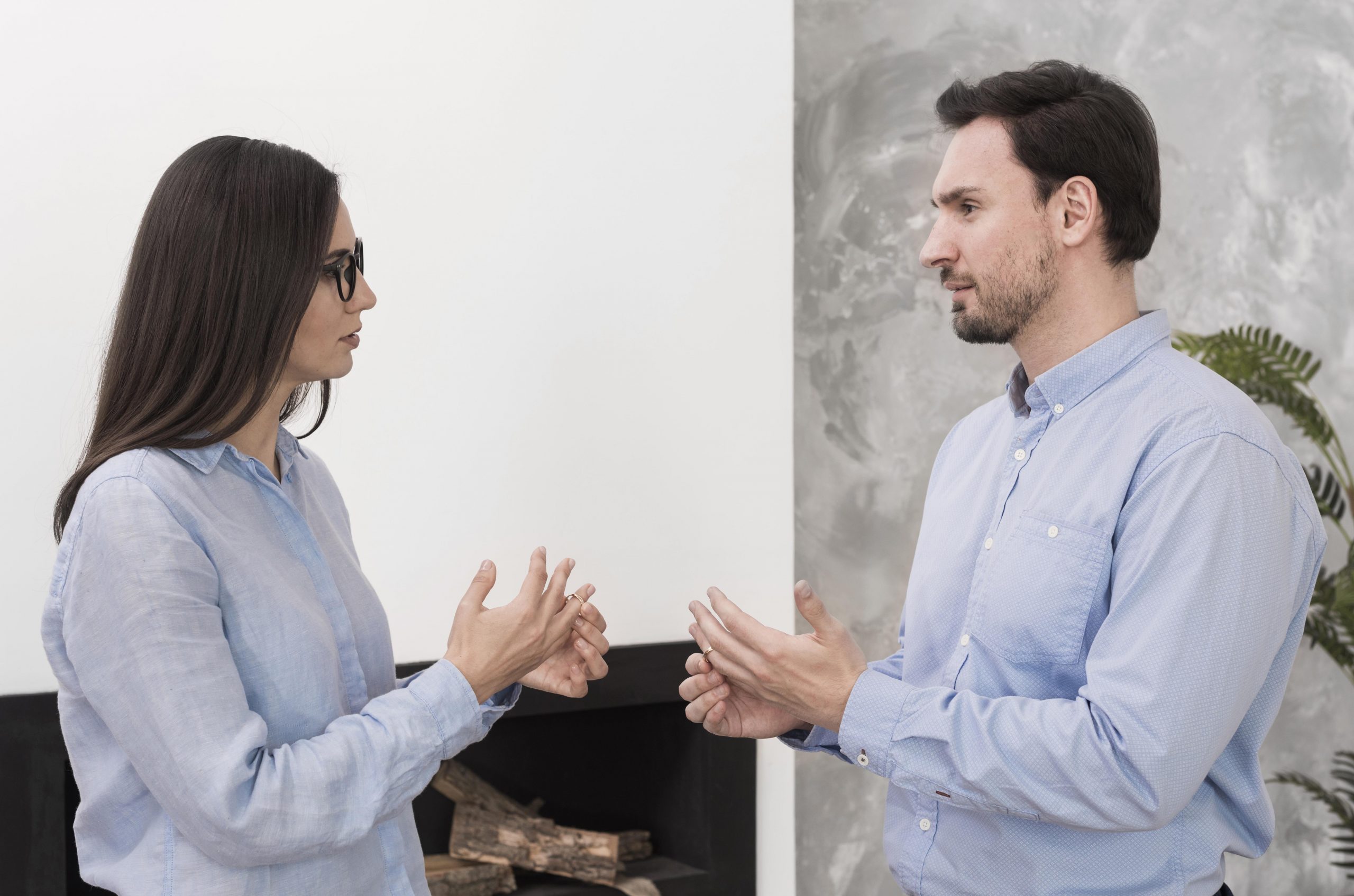
Non-verbal communication is the act of expressing yourself through gestures, without using words. It generally encompasses posture, facial expressions, and other body movements. Non-verbal communication skills express a lot about a person's character, as there are movements or expressions so ingrained in the personality that they are displayed unconsciously.
The non-verbal elements of communication are as follows:
- Facial expressions
- Postures
- Gestures
- Appearance (first impression)
Importance of non-verbal communication
Properly executed non-verbal communication denotes emotional intelligence in interviews, as it allows you to demonstrate confidence and security, that you are a supercharged freelancer who is in control of your emotions, that you are not nervous, and that you are in control of the situation.
If you do not perfectly master your non-verbal communication skills, you will get nervous in an interview, and keep in mind that human resources personnel are trained to analyze your behavior in each question, hence the importance of taking note of our advice on body language in interviews.
Your non-verbal language should be consistent with your verbal language. Don't hesitate, forget about sweaty palms, and show confidence. This will let them know that you can work calmly without losing control during stressful work situations.
Interview body language tips
Don't worry if you haven't yet mastered non-verbal communication skills perfectly. This is an art that takes time, and it all starts today by following our interview body language tips and putting them into practice to make your path to career success easier.
Practice alone
The best way to overcome a situation that makes you nervous is to practice that scenario at home. Emotional intelligence in interviews does not come naturally; it is developed through practice. Rehearse at home as many times as necessary, from the greeting to your introduction and some answers to basic questions. Practice your posture and gestures when you speak and try to maintain eye contact, either directly with the interviewer or with the screen if your interview is virtual.
Be sure to demonstrate confidence and spontaneity. Visualize yourself in the job, convince them with your posture, believe it, and feel it.
Be punctual
Punctuality is one of the most important non-verbal communication skills. Try to arrive 5 minutes early; this says a lot about your responsibility, more than any words. Greet the interviewer cordially with a subtle smile on your face, conveying friendliness.
Take care of your appearance
Appearance is vital. We can give you a million interview body language tips, but if you show up looking unkempt, there will be nothing we can do for you. Remember that your appearance is your calling card and that you only have one chance to make a first impression.
Don't wear extravagant clothing. Go for simplicity, but be clean and neat, with well-groomed hair or a clean shave.
Gestures when listening
Emotional intelligence in interviews encompasses a large part of how we react; you should be mindful of your gestures when listening to the speaker. Nod your head to convey confidence, enthusiasm, and show that you are paying attention to the speaker. This is one of the most essential non-verbal communication skills as it expresses active listening and interest in the topic of conversation.
Among our interview body language tips, it is extremely important that you avoid crossing your arms, touching your hair or face, clenching your fists, or looking at your watch. These are gestures that suggest you are nervous, rushed, uninterested, or that your attention is elsewhere.
Emotional intelligence in interviews: Understand your own emotions
Emotional intelligence in interviews is not a superpower or an innate ability; it is a matter of self-awareness. Therefore, before facing any new job challenge, it is crucial to engage in a process of introspection to understand your deepest emotions and fears and what triggers them. Only then will you fully understand your strengths and weaknesses and be able to implement strategies for improvement.
This self-assessment process will allow you to learn how emotions make you act under pressure and also how to manage them efficiently without affecting your productivity or ability to concentrate. Remember that this process of self-awareness will reflect how past situations have shaped your emotional responses. An introspective approach will allow you to reach your full emotional intelligence potential in interviews.
Use relaxation techniques
We can offer countless interview body language tips, but if your nerves are not under control, there is not much you can do. Your body reflects what your mind is thinking, which is why emotional intelligence in interviews is the key to convincing anyone that you are the ideal person for the job.
Before each interview, take 5 to 10 minutes to do guided breathing exercises or meditation. This will help you dispel anxiety and focus your attention on the interview. If you calm your mind, your body will act as a reflection of that. This feeling of calm will allow you to interact more fluidly with the interviewer.
Cultivate empathy
Through empathy, you will demonstrate your ability to understand other points of view and perspectives, which is extremely important in any work team. Empathy not only denotes emotional intelligence in interviews, but also helps you convey confidence, security, and present yourself as someone with whom a positive working relationship can be built.
At Alpha Solutions, we always recommend that our freelancers prepare and rehearse for interviews. This is the only way they can identify their mistakes and learn how to correct them. The best way to build non-verbal communication skills is to practice and leave no room for improvisation. Remember that the key is your level of confidence. Act naturally and you will easily fit in with the best teams.
Related Posts
Enhancing Interviews with Emotional Intelligence and Non-Verbal Communication
Job interviews are not just about professional experience; 70% of success is emotional intelligence in…
Effective Communication Strategies for Remote Teams
Effective communication is essential in any type of work, but when it comes to remote…
Security Practices for Remote Work Environments
Remote working is a trend that is increasingly affecting jobs, so in many places it…
Cost-Saving Benefits of Remote Staffing
In recent years, small and medium businesses have increasingly looked at remote staffing as a…
test